This guide explains how to start remote work from Syria, choose a suitable field, identify the skills you need, build work samples, assess opportunities, and apply safely.
J
Jobara
Written for the archive
7 days ago10 min read
You can start working remotely from Syria even if you have never held a remote role before. Wanting to work from home, however, is not enough to secure an opportunity. Employers are looking for someone who can complete a specific task or solve a real problem.
To make your search more focused and your applications more convincing, first identify the work you can offer. Then find out which skills you still need and prepare evidence that shows you can do the work before you begin applying.
Define the work you can offer
Remote work is not a field on its own. It is a way of doing many different jobs outside a company office. You might work remotely in customer support, content writing, design, sales, software development, or administration.
That is why your first question should not be, “Where can I find remote work?” A better question is, “What work can I offer in return for pay?”
To reach a realistic answer, review the tasks you have handled through education, previous jobs, volunteering, or everyday responsibilities. You may already have useful skills that you have never considered professional experience.
For example:
Share this article:
Related stories
Keep reading in the same lane with a few hand-picked follow-ups.
• If you communicate well and can explain information calmly, customer support or sales may suit you.
• If you are organised and attentive to detail, consider administrative work or data organisation.
• If you write clearly, content writing, editing, proofreading, or translation may be possible starting points.
• If you use design or video-editing software, you can create samples that show your current level.
• If you enjoy solving technical problems, software development or website and application testing may suit you.
The UK National Careers Service explains that skills do not come only from previous jobs. You can also identify them through education, training, and tasks you perform in daily life.
Do not choose a field only because it is popular or someone has described it as easy. Choose one that matches your current abilities and gives you room to improve and demonstrate what you can do.
Know what kind of work you want
Before you begin searching, decide whether you want a remote job or freelance work. Each option requires a different approach to finding opportunities and presenting yourself.
In a remote job, you normally work for one company under agreed hours and responsibilities. You report to a manager or collaborate with a team. The role may be full-time or part-time, but it resembles a traditional job except that you work away from the company’s office.
As a freelancer, you provide a defined service to one or more clients. You might complete a short project, such as writing an article or designing a visual identity, and then move on to a different project.
If you want a more stable income and prefer working with a team, a remote job may be closer to what you need. If you enjoy varied projects and can manage client communication, freelance work may be a better fit.
Understanding the difference early helps you spend your time on opportunities that match how you want to work.
Use job ads to identify skill gaps
Enthusiasm can lead you to enrol in many courses before you know what you actually need. Learning becomes far more useful when it is connected to the requirements of real roles.
To understand what employers expect in your chosen field, review several similar vacancies. Aim for about ten when enough examples are available. Read them carefully even if you are not ready to apply, and note the requirements that appear repeatedly, such as:
• Essential skills.
• Software and tools.
• Required language level.
• Years of experience.
• Typical daily tasks.
• Working hours and time zone.
Then separate your findings into skills you already have, skills you can develop in a short period, and requirements that will take more time and experience.
This gives you a learning plan connected to the jobs you want instead of sending you from one unrelated course or subject to another.
Which fields offer remote work?
Many kinds of work can be done remotely, but the difficulty of entering each field depends on your experience and skills.
Fields that commonly include remote opportunities include:
• Customer service and support through chat or email.
• Sales and communication with prospective customers.
• Content writing, editing, and translation.
• Social media management.
• Graphic design and video editing.
• Administrative assistance and data organisation.
• Software and web development.
• Software testing and website review.
The presence of remote roles in these fields does not mean every one is suitable for beginners or easy to enter. To avoid spreading your effort across too many directions, choose one field at first and focus on the skills that recur in its vacancies.
Build a reliable work setup
Once you have chosen a field, make sure you can perform the work consistently. Suitable skills will not be enough if you lack the basic tools or conditions needed to meet your commitments.
Device and internet connection
Not every remote role requires a high-specification computer. You do need a device that can run the software used in your field and an internet connection that lets you send files and attend meetings when necessary.
Power or internet interruptions can affect your ability to work reliably, so consider a backup that fits your circumstances, especially when a job requires you to be available during set hours.
Communication and time management
When team members work from different places, clear communication helps everyone understand what has been completed and what still needs attention.
Remote-work skills therefore include writing understandable messages, asking questions when instructions are unclear, and warning the team early when a problem may delay delivery.
The International Labour Organization’s Practical Guide on Teleworking also highlights communication, time management, and clear expectations between workers and their teams.
Use a simple method to organise tasks and deadlines, whether it is a daily list, a calendar, or task-management software. The specific tool matters less than knowing what you need to do and when it is due.
Professional accounts and files
When you find a suitable opportunity, you should be able to send your information and samples without delay. Prepare an email address with a clear name, update your CV, and organise your work samples in files that are easy to open and review.
Use different passwords for your accounts and enable two-step verification when it is available. These accounts may later contain work-related correspondence and documents.
Can you start without previous experience?
You can apply for some opportunities without years of experience, but an employer will still need a reason to trust that you can perform the task.
To compensate for limited experience, create a practical sample that demonstrates your current ability. If you want to write content, prepare two articles about subjects you understand. If you want to manage social media, build a short content plan for a fictional project. If you are targeting design work, create a small set of related designs instead of presenting unrelated pieces.
The same principle applies to other fields. You could:
• Create a well-organised spreadsheet to demonstrate your ability to work with data.
• Write sample responses to customer questions if you are targeting support roles.
• Build a small software project if you want a technical role.
• Review a website and write a clear report about the problems you found if you are interested in software testing.
Clearly identify these as training or personal samples, and never attribute them to a client you have not worked with. Their purpose is to prove your skill, not to suggest experience you do not have.
How to find a suitable opportunity on Jobara
After choosing your field and preparing your CV and samples, review the job opportunities published on Jobara and look for listings that clearly allow remote work.
Before applying, read the entire listing and make sure the arrangement fits your circumstances. Pay particular attention to:
• Whether applicants living in Syria are accepted.
• Required working hours.
• The team’s time zone.
• The language used at work.
• Required devices or software.
• The payment method and whether you can use it where you live.
• Whether the opportunity is an employee role, a temporary contract, or a freelance project.
Remote work does not automatically mean that a position is open to applicants in every country. Checking these details saves you from preparing an application for a role the company cannot complete with you.
State your country of residence accurately. Incorrect information may create problems later when contracts are signed, details are verified, or payment is arranged.
Tailor your application
Sending the same CV to every employer can bury the experience that is most relevant to a particular role beneath less useful details.
Arrange your CV around the job requirements so the employer can quickly understand why you are a good fit. If the listing emphasises customer service, highlight your experience in communication and problem solving. If it focuses on organising data, bring attention to your accuracy and spreadsheet skills.
Keep your application message short and explain the connection between your experience and the role. For example:
Hello, I am applying for the customer support position because I have experience answering customer questions and following issues through to resolution. I reviewed the job requirements and attached my CV along with a sample that shows how I work. I would be happy to discuss the role with you.
This gives the employer a clear reason to review your application, unlike a generic message that only says you need work.
Verify the opportunity before sending money or documents
Searching for remote work can expose you to advertisements designed to collect money or personal information. Verify the organisation before sharing sensitive documents or responding to a payment request.
The US Federal Trade Commission lists several warning signs, including asking a job seeker to pay for the promise of employment, sending a cheque and requesting part of the money back, or requiring the person to buy equipment from a specified seller before work begins.
Stop pursuing an opportunity if:
• You are asked to pay a fee to get the job.
• The job description is vague while the promised pay is unrealistically high.
• The other party refuses to explain the company name or the actual tasks.
• You are asked for financial information or sensitive documents before a clear interview has taken place.
• The person contacts you from an account that cannot be connected to the company they claim to represent.
Checking a listing does not mean distrusting every opportunity. It protects your time and information from offers that are not genuine.
A practical plan for your first week
The steps above may feel like a lot if you try to complete them all at once. Turn them into a clear start by spreading them across one week:
1. Choose one field that matches your current skills.
2. Read ten real vacancies in that field when enough examples are available.
3. Write down the requirements that appear repeatedly.
4. Choose one skill you need to improve.
5. Create a small sample that proves you can do the work.
6. Adjust your CV for the field.
7. Apply to suitable opportunities and keep a record of the applications you send.
Your goal in the first week is not to send dozens of applications. It is to build a foundation that makes each later application stronger. When you understand what you can offer and have evidence to support it, your search becomes clearer and you become better at recognising suitable opportunities.
Starting remote work from Syria does not depend on a website or tool that can hand you a job. It begins with understanding your skills, choosing a clear field, preparing for its requirements, and applying to an opportunity for which you can explain exactly why you are a good fit.
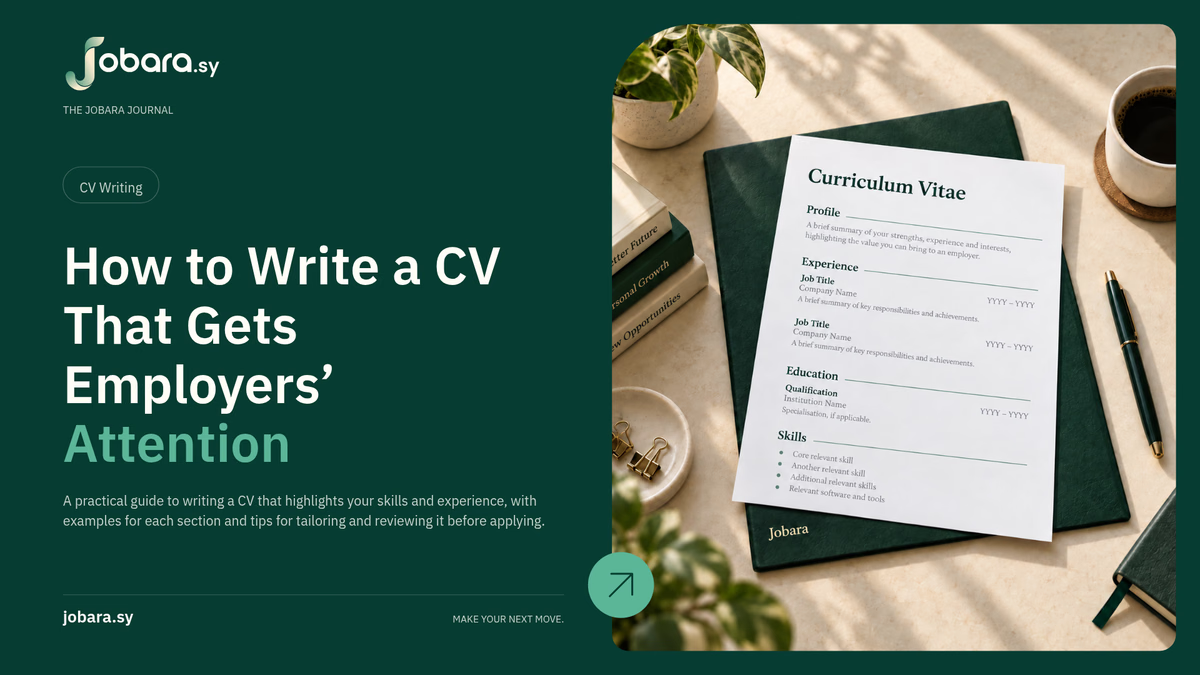
A practical guide to writing a CV that highlights your skills and experience, with examples for each section and tips for tailoring and reviewing it before applying.