Job Search in Syria Going Nowhere? Here’s What You Can Do
A practical guide to looking for work in Syria, covering where to find suitable opportunities, how to apply and follow up, with sample messages and advice on checking job adverts.
J
Jobara
Written for the archive
17 days ago8 min read
If your job search in Syria is getting nowhere, take a moment to review your approach before sending another application. Look beyond a single source, choose opportunities that match your skills, and tailor each application to the role. Then keep a record of your applications and responses so you can see what needs improving.
You may not hear back even when you are a good fit. Some employers take longer to review applications, and their hiring needs may change along the way. Keep looking without treating silence as a judgment on your abilities, while reviewing the parts of the process you can improve.
What should you consider when looking for work in Syria?
Finding a suitable opportunity can take time, especially when business activity varies from one area to another. In its analysis of Syria’s economy, the United Nations Development Programme describes the continuing effects of disruption on the labour market and the challenges facing jobseekers.
It is worth expanding your search to include small businesses and local employers near you. Your skills may suit work you have not considered before.
When you find an opportunity, consider the practical details before deciding. The workplace location, travel costs and working hours affect whether you can stay in a job, even if the duties suit you. Ask about these details, then work out how much of the salary would remain after commuting costs.
Decide what you can offer and what you need from a job
Share this article:
Related stories
Keep reading in the same lane with a few hand-picked follow-ups.
Searching becomes easier when you know what kind of work suits you. Start with tasks you can do well, then look for roles that need those skills.
For example, if you are good at organising files and communicating with customers, you could explore reception, customer service or administrative support roles. Read the duties in each advert to see which are closest to your experience. A job title alone does not always explain what the work involves.
Alongside your skills, identify your basic requirements:
Areas you can travel to every day.
Working hours you can commit to.
An income that covers your needs and work-related costs.
These points will help you compare opportunities and decide which are worth applying for. If you are a recent graduate, changing careers or returning to work after a break, also consider the skills you gained through study, training or previous experience, and how you could use them in a new role.
Where can you find job opportunities in Syria?
Once you know which roles suit you, choose several sources to check regularly. Combining job platforms, company pages and professional contacts gives you access to a wider range of opportunities.
Job platforms and company pages
You can start by browsing the jobs available on Jobara, while also checking the official websites and pages of companies you would like to work for.
When searching for job vacancies, add a city to the job title, such as “administrative assistant Damascus” or “accountant Aleppo”. These are examples of search phrases, not announcements of current openings.
If the results are limited, try related job titles. Similar duties may appear under a different title, so read the details before ruling out an advert.
Colleagues and professional contacts
A former colleague or someone you studied with may know an employer looking for your skills. Tell people you trust what you are looking for, and be specific so they can help more easily.
For example, you could send a message like this:
Hello, I am currently looking for a customer service role in Homs. I have experience in handling orders and communicating with customers. If you come across a suitable advert or know a company looking for these skills, I would appreciate you passing it on.
This makes it clear which opportunities are relevant to you. The UK’s National Careers Service explains that networking can help you find information about jobs, as well as advice and support during your search.
Social media groups and pages
You may come across a suitable advert in a group, but check its source before applying. Find the original post and review its date, the employer’s name and the application instructions.
Avoid relying on a shared screenshot alone. The deadline may have passed, or important details may be missing. If you cannot find the advert on the employer’s official pages, try contacting them through an independently verified channel to check it.
How do you choose which jobs to apply for?
Before preparing an application, read the duties and requirements and ask yourself:
Can I carry out the main duties?
Do I meet the essential requirements?
Do the location and working hours suit me?
Do I know how to apply and which documents to send?
Pay attention to how requirements are worded. “Fluent English is required” is different from “English is an advantage”. If you meet the essentials but lack a preferred skill, applying may still make sense. Do not assume, however, that an employer will overlook a clearly stated mandatory requirement.
If important details remain unclear, ask about them. Knowing the actual work location or duties can save you time applying for an opportunity that does not suit you.
Make your application clear and follow the instructions
Once you decide to apply, use the method specified by the employer. Complete the required form if there is one, and include the job reference in your email subject if the advert asks for it.
Keep your application message brief and direct. State the role you are applying for and the experience that relates to it, for example:
Subject: Application for Administrative Assistant — [Your name]
Hello,
I am applying for the advertised Administrative Assistant position. I have experience in organising files, coordinating appointments and communicating with clients. I have attached my CV with further details.
I would be happy to provide any additional information you need.
Thank you for your time.
Adapt the example to reflect your actual experience, then check your attachments and contact details before sending it.
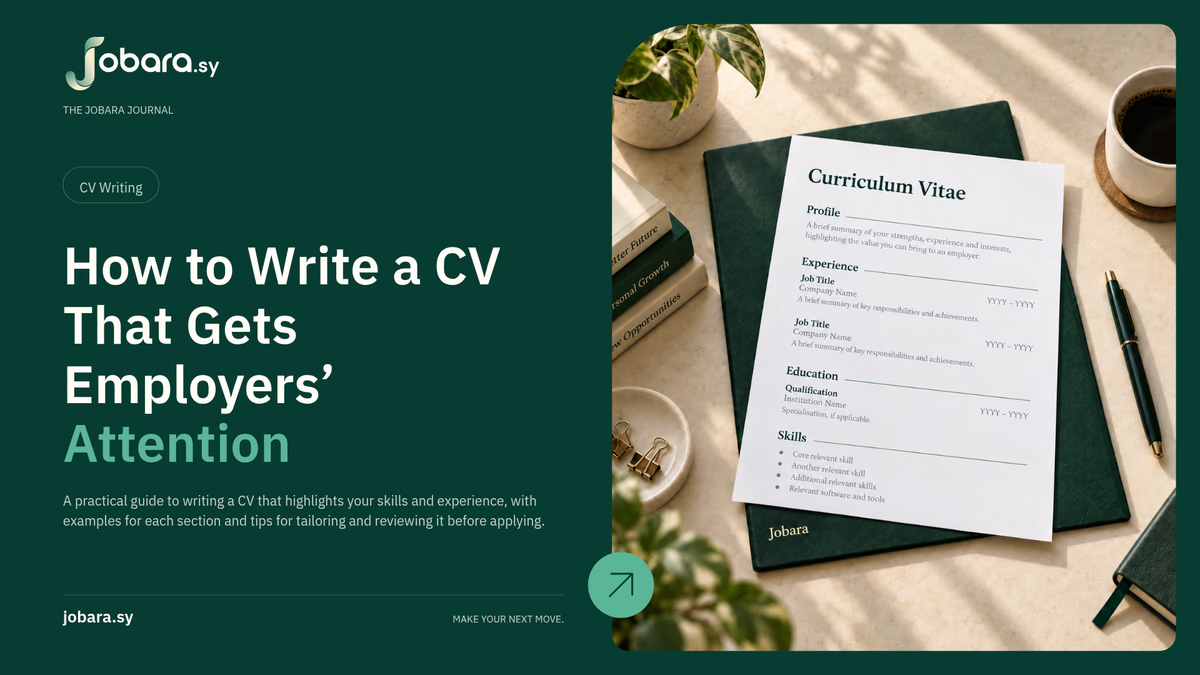
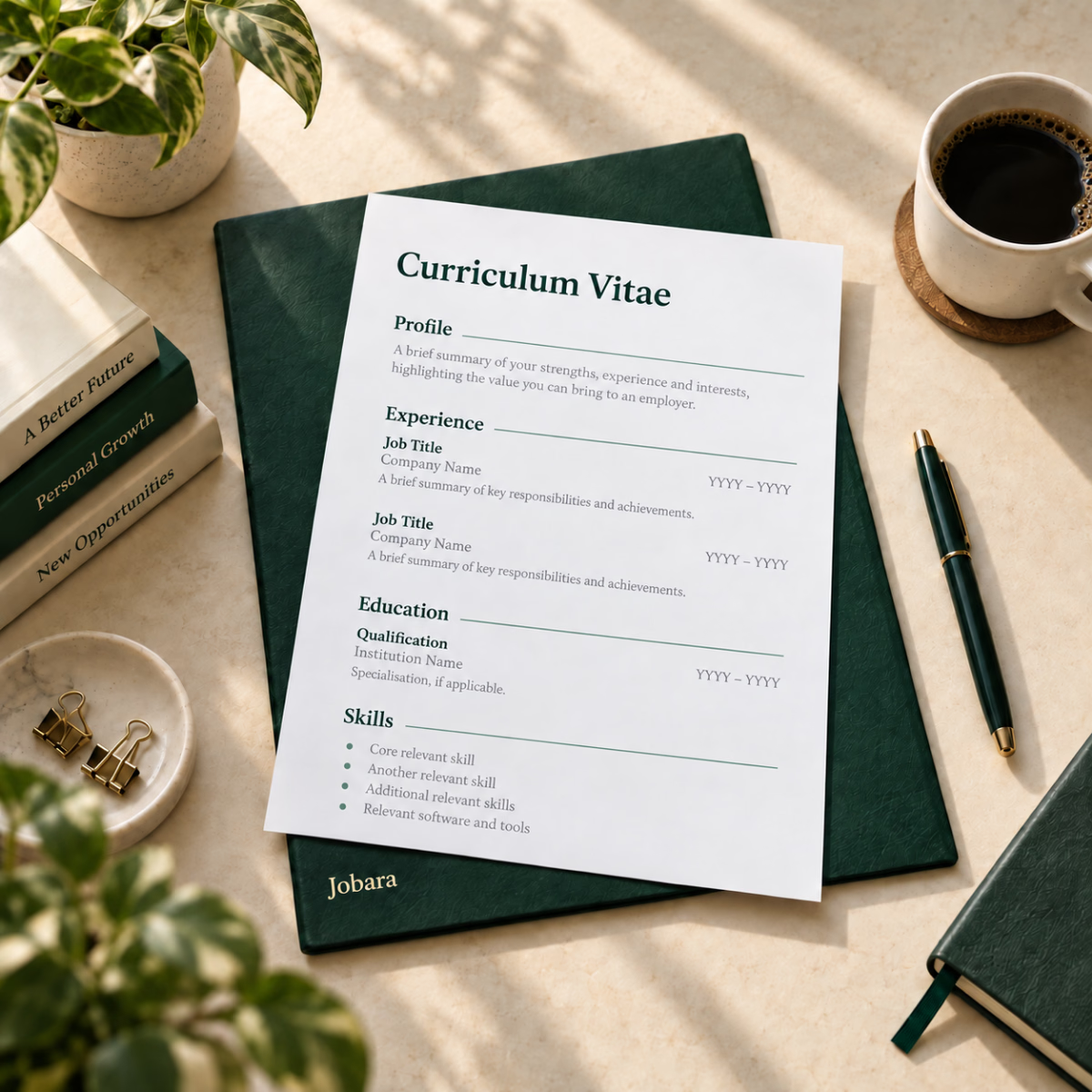
If you need help improving the CV itself, see our guide, How to Write a CV That Gets Employers’ Attention. It explains what to include in each section and how to describe your experience with clear examples.
Track your applications and learn from what happens next
As you apply for more roles, it becomes harder to remember the details of each application. Keep a notebook or a simple spreadsheet to record:
The company, job title and link to the advert.
The date you applied and the version of your CV you sent.
Any response, appointment or action you need to follow up on.
If the employer gives a response date, wait until it has passed. If no date is given, you could consider a polite follow-up after a week or two, unless the advert asks applicants not to contact them. This is a suggested timeframe for organising follow-ups, not a fixed rule.
You could write:
Hello, I applied for the [job title] position on [date]. I would like to ask whether there are any updates on my application, or any further information I can provide. Thank you for your time.
Review your records from time to time to see where your search is getting stuck:
If you cannot find suitable opportunities, try new sources or related job titles.
If you apply but do not receive replies, check how closely you meet the requirements, then review whether your applications are clear and follow the instructions.
If you reach interviews but do not receive offers, spend more time preparing, especially the examples you use to explain your experience.
These observations can help you decide what to review, but they cannot tell you on their own why an application was rejected or delayed.
Check the offer before sharing money or sensitive information
A long job search can make an offer of quick acceptance especially appealing. Even so, take the time to verify the employer, particularly if you are asked to pay for a guaranteed job.
Use the contact details on the organisation’s official website to verify the offer. Do not send financial details or sensitive personal documents before checking who is asking for them and why.
Start with one clear step
Choose something you can improve today. If you rely on a single source, add another relevant one. If you send the same application for every role, take a little more time with the next one to explain why you are a good fit.
Record what you do and follow up on the outcome, without letting the search take over your whole day. Setting aside regular time for it can help you stay consistent while leaving room to rest and develop a skill you need.
You do not need to change everything at once. Start with what you can improve now, then review your approach as you learn from the results.
A practical guide to writing a CV that highlights your skills and experience, with examples for each section and tips for tailoring and reviewing it before applying.