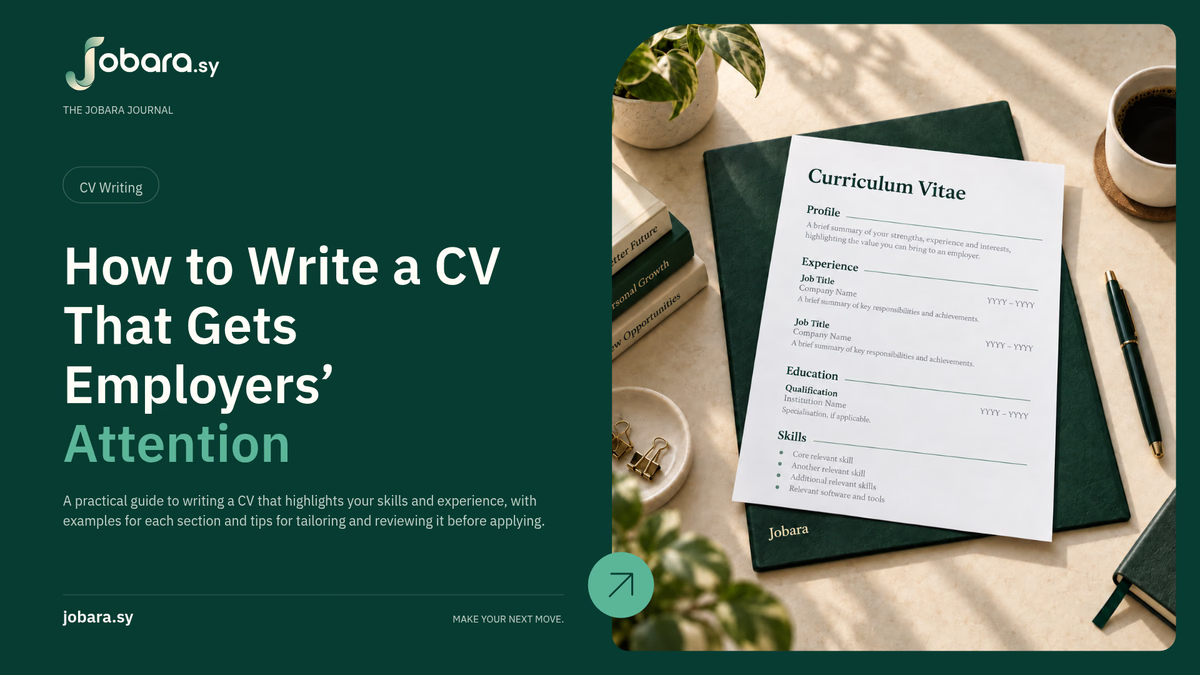
A practical guide to writing a CV that highlights your skills and experience, with examples for each section and tips for tailoring and reviewing it before applying.
J
Jobara
Written for the archive
17 days ago6 min read
A CV sums up years of study, work and learning in a few words for someone who has never met you.
To get an employer’s attention, tailor your CV to the job, explain your skills and experience with examples, and make the most important information easy to find. The reader should be able to understand what you can contribute without searching through unnecessary detail.
When writing your curriculum vitae (CV), ask yourself: What does this employer need to know about me to consider inviting me to an interview?
Your answer will help you decide what to include, what to shorten, and which information to put first.
Start with the job advert
Before opening your CV to make changes, read the advert carefully. Look at the responsibilities, essential skills, and any application instructions.
Suppose you are applying for an administrative assistant role that requires Excel, appointment scheduling, and customer communication. Think of times you have carried out these tasks and highlight them in your CV. This is a practical way to tailor your CV to a job, as recommended by the UK’s National Careers Service.
You can choose an advert from the jobs available on Jobara, then write a short answer against each requirement:
Share this article:
Related stories
Keep reading in the same lane with a few hand-picked follow-ups.
What is required? The skill or task mentioned in the advert.
What can I offer? Relevant experience or knowledge.
What example supports this? A task you completed, a project you contributed to, or training where you put the skill into practice.
If your knowledge of a skill is limited, describe your actual level. You will need to explain what you have written if you are asked about it in an interview.
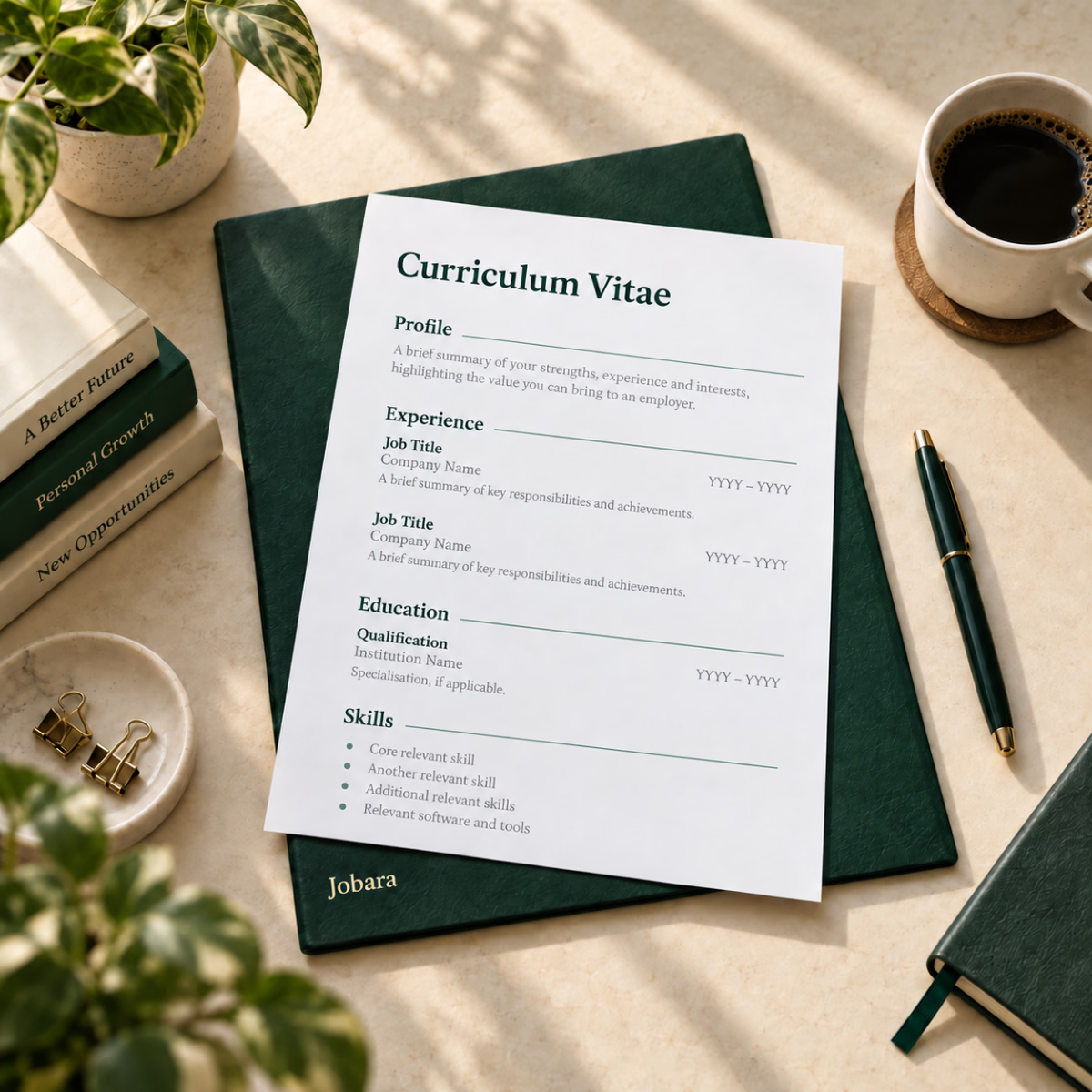
Which CV sections do you need?
Start with your contact details, then arrange the other sections according to what supports your application most. Give relevant work experience a prominent place. If you have recently graduated, your education and academic projects may be the best starting point.
Contact details
Include your name, a phone number where you can be reached, and an email address you check regularly. You can also add your city and a link to your portfolio or professional profile when relevant to the role.
Check these details character by character: this is how the employer will contact you.
A short profile explaining what you can offer
If you include a personal profile, make it relevant to the job. A phrase such as “an ambitious person who enjoys working and developing” gives the reader little detail about your abilities.
An illustrative example for someone with administrative experience:
Administrative assistant with experience in scheduling appointments, handling correspondence, and maintaining tracking spreadsheets in Excel. Regularly communicates with customers and coordinates requests between departments.
Use this example to understand the approach, then write a profile that reflects your own experience.
Work experience and what you achieved
For each role, include your job title, the organisation’s name, and the dates you worked there. Then describe your main responsibilities and contributions. Start with your most recent role.
For example, “responsible for tracking orders” leaves a lot unexplained. You could make it more specific:
Tracked customer orders from registration to delivery, updated the daily tracking spreadsheet, and coordinated with the delivery team to resolve delayed orders.
If you made an improvement, explain what you did:
Created a shared spreadsheet for appointments and orders, making it easier for the team to see each order’s status and follow up.
Add numbers when you have accurate data, such as the number of orders or the size of the team. If you do not have reliable figures, describe your contribution clearly. Harvard’s resume guidance recommends specific, fact-based language that shows the results of your work.
Education and relevant courses
Include your qualification, institution, and graduation year or expected graduation date. Add courses that support the role you are targeting.
If you completed an Excel course, for example, consider mentioning what you learned to do with it. A course title becomes more useful when the reader can connect it to a task the job requires.
CV skills
Choose the skills the job requires and explain what you can do with them.
You could write:
Excel: creating tracking spreadsheets, sorting data, and using basic formulas.
Customer communication: responding to enquiries and following up on orders and complaints.
English: reading correspondence and writing simple replies, if this accurately describes your level.
For skills such as organisation and teamwork, try to show them in your experience descriptions too. A clear example helps the reader understand the skill you mean.
If you are unsure which skills to include, think about what you have done at work, in education, through volunteering, and in everyday life. The National Careers Service’s skills guidance suggests this approach when assessing your abilities.
What if you have no work experience?
Start with what you have done so far: an academic project, practical training, volunteering, freelance work, or regular help with a family business. These experiences can demonstrate skills that matter to the role.
An illustrative example of a university project:
Worked with three classmates on a field study. Organised the questionnaires, entered the results in Excel, and prepared the charts used in the final presentation.
Label the experience accurately, for example “university project” or “practical training”, and explain your role. The National Careers Service recommends drawing on projects, volunteering, and training when preparing a CV for your first job.
How can you make your CV easy to read?
Use clear headings, short paragraphs or concise bullet points, and an easy-to-read font. Keep dates and spacing consistent, and make the most important information easy to see.
For most job applications, one or two pages is a reasonable starting point, depending on your experience and the information requested. Follow any length limit in the advert; academic CVs and some specialist applications may need more detail. This is consistent with the University of Oxford’s CV guidance.
When preparing the file:
Follow the language and file-format requirements in the advert.
If no format is specified, you can use PDF to preserve the layout.
Open the final version on both a phone and a computer. Check that any Arabic text and line breaks display correctly.
Choose a clear file name, such as Ahmad-Ali-CV.pdf.
If the application system fills in your details automatically after you upload your CV, check the information it extracts. Some systems can have difficulty with image-based files or complex layouts; Greenhouse documents examples of these parsing problems. A simple layout and text that can be selected and copied are practical ways to reduce them.
Check these points before you send it
Read your CV as if you were seeing it for the first time:
Is it clear why you are a good match for this job?
Have you explained what you did with specific examples?
Can you explain every skill or achievement you mention?
Are your phone number and email address correct?
Have you checked spelling and dates?
Have you followed the advert’s instructions and attached the right version?
Ask someone you trust to read it too. Ask them: What are the three main things you learned about my abilities? If they miss important points, you may need to make those points more prominent.
Start with one clear improvement
Choose a job you want to apply for and identify the three most important requirements in the advert. Then review your CV: where is the evidence for each one?
You may need to explain a previous role more clearly, add a relevant project, or shorten information that does not support this application. Once you have prepared these details, you can create your CV on Jobara.
A clear, tailored CV helps an employer understand your abilities and how they fit the opportunity. Make sure every section adds something worth reading.
Remote Work from Syria: A Beginner’s Guide
This guide explains how to start remote work from Syria, choose a suitable field, identify the skills you need, build work samples, assess opportunities, and apply safely.